In this article13 sections · Jump to an idea
4 min read
Small bathrooms have almost no floor to give up, so nearly every storage solution has to be shallow, wall-mounted, or hidden inside something that’s already there.
Here’s what fits, with the depths that make the difference.
The depths that work
- Over-toilet shelving: 8–10 inches deep. Any more and you’ll knock your head.
- Wall cabinet: 6–8 inches. Enough for bottles, shallow enough not to intrude.
- Behind-door storage: 4–5 inches
- Recessed niche: 3.5 inches (a standard stud cavity) — invisible depth, since it sits inside the wall
- Narrow floor cabinet: 10–12 inches
Clearance to protect: 21 inches of clear floor in front of the toilet, and 30 inches in front of the vanity.
1. Over the toilet
The most reliable dead space in any bathroom. Roughly 30 inches of wall doing nothing.
Options:
- Floating shelves — start the lowest at 24 inches above the cistern so the lid opens
- A wall cabinet — closed storage, hides everything
- An over-toilet étagère — freestanding, straddles the toilet, no drilling. Best for renters.
Keep it 8–10 inches deep so nobody bumps their head standing up.
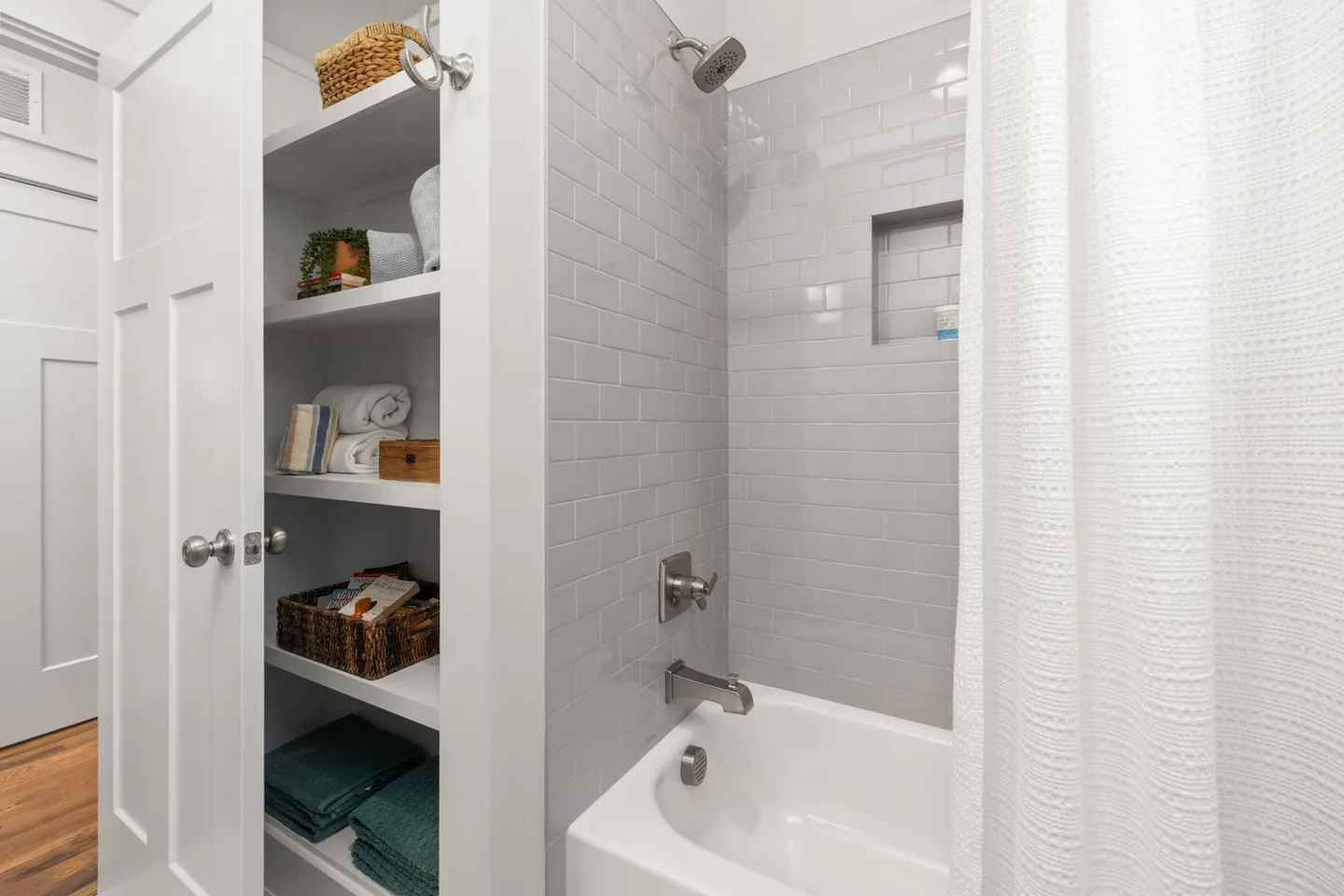
2. Recess into the wall
The space between studs is 3.5 inches deep and costs nothing but the work.
- A shower niche — replaces the shelf full of bottles and looks built-in
- A recessed medicine cabinet — storage with zero projection
- A recessed shelf beside the toilet for spare rolls
Check for pipes and wiring before cutting. Not for external walls in cold climates.
3. Under the sink
Usually a chaotic void with a pipe through it.
- U-shaped organiser that fits around the trap
- Stacking drawers rather than a single shelf
- A tension rod across the top with spray bottles hanging from it
- A small pull-out bin on the door
- Adhesive hooks inside the door for a hairdryer or brushes
Even a pedestal sink can take a small basket underneath.
4. The back of the door
Four inches of usable depth that most people ignore.
- Over-door hooks for towels and robes
- A slim over-door organiser for products
- A hanging basket for hair tools
5. Corner shelving
Corners are the least useful space in any room. Stacked corner shelves — in the shower or beside it — turn dead space into storage without touching the walkway.
6. Vertical wall storage
- A ladder shelf leaning against the wall — no drilling, holds towels and baskets
- Floating shelves above the toilet or beside the mirror
- A tall narrow cabinet, 10 inches deep
- Rail with hanging cups for toothbrushes and small items
- Magnetic strip inside a cabinet for tweezers and clippers
7. Shower storage
The bottles-on-the-floor problem.
- A recessed niche — the best solution if you’re renovating
- A tension corner caddy — no drilling, holds a lot
- A hanging caddy over the shower head
- Suction shelves — check the weight rating, most are optimistic
- A shower stool that doubles as storage
8. Towel storage
Towels take more room than people plan for.
- A ladder rail — leans against the wall, holds three or four
- Hooks instead of rails — a hook takes 3 inches of wall, a rail takes 24
- A rolled-towel basket on the floor or a shelf
- Over-door hooks
- A heated towel rail if you’re renovating — storage plus function
Hooks over rails is the single best small-bathroom towel decision.
9. Reduce what’s in there
The most effective small-bathroom storage strategy isn’t a product.
Most bathrooms hold three times more than they need — sample bottles, half-empty products, expired medicine, spare toiletries.
Keep the things you use weekly in the bathroom. Everything else goes in a linen cupboard or a bedroom. A small bathroom with 15 items feels spacious; the same room with 60 feels chaotic no matter how good the shelving is.
10. Baskets and containers
Loose items are what makes open shelving look cluttered.
- Matching baskets on open shelves
- A tray on the vanity grouping daily items
- Clear containers inside cabinets so you can see what’s there
- One basket per category — hair, skin, dental, spares
Uniform containers turn visual mess into a clean line, and they cost very little.
Renter-friendly, no drilling
- Freestanding over-toilet étagère
- Leaning ladder shelf
- Tension rods and tension caddies
- Over-door hooks and organisers
- Adhesive hooks — check the weight rating and the wall finish
- Freestanding narrow cabinet
- Rolling cart in a gap beside the vanity
Making storage look intentional
- 70% closed, 30% open. Bathrooms fill with visually busy products.
- Decant hand soap and lotion into matching bottles
- Roll towels rather than folding, on open shelves
- One plant — a small pothos or fern loves the humidity
- Leave some shelf empty
Depth reference:
| Storage type | Depth |
|---|---|
| Recessed niche | 3.5 inches |
| Behind-door | 4–5 inches |
| Wall cabinet | 6–8 inches |
| Over-toilet shelf | 8–10 inches |
| Narrow floor cabinet | 10–12 inches |
| Clear floor at toilet | 21 inches |
| Clear floor at vanity | 30 inches |
Still wondering
Common questions
How deep should over-toilet shelving be?
8 to 10 inches. Any deeper and you will knock your head standing up. Start the lowest shelf about 24 inches above the cistern so the lid still opens fully, and you get roughly 30 inches of otherwise dead wall back.
How much clear floor does a small bathroom need?
21 inches in front of the toilet and 30 inches in front of the vanity. Protect those two measurements first and fit storage into what is left — which is exactly why almost everything in a small bathroom has to be shallow or wall-mounted.
What bathroom storage works without drilling?
A freestanding over-toilet etagere, a leaning ladder shelf, tension rods and tension corner caddies, over-door hooks and organisers, a narrow freestanding cabinet, and a rolling cart in the gap beside the vanity. Adhesive hooks work too, but check the weight rating against your wall finish.
Are hooks or towel rails better in a small bathroom?
Hooks, comfortably. A hook takes about 3 inches of wall; a rail takes 24 for the same towel. In a room where wall space is the only space you have, that is a trade worth making almost every time.
How deep is a recessed bathroom niche?
3.5 inches — the depth of a standard stud cavity — so it costs no room depth at all, which is what makes it the best answer to bottles on the shower floor. Check for pipes and wiring before cutting, and avoid external walls in cold climates.
How do I stop open bathroom shelving looking cluttered?
Aim for roughly 70% closed storage to 30% open, use matching baskets with one per category, decant soap and lotion into matching bottles, roll towels rather than folding them, and leave some shelf deliberately empty.
Save it
Pin this for your board
Tap the image to save it to Pinterest and come back to it when you are ready to start.